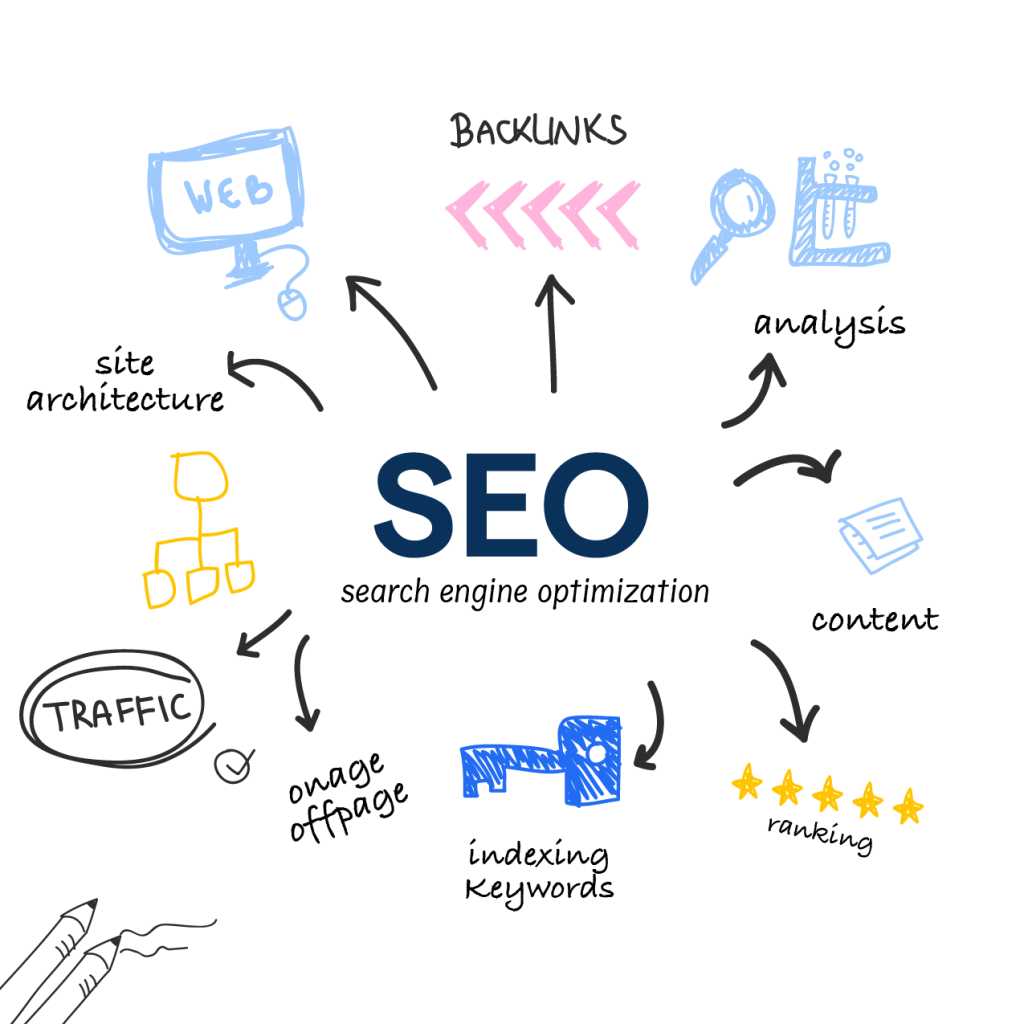
Search Engine Optimization is the process of optimizing a website to achieve a higher ranking in search engines like Google, Yahoo or Bing. It improves organic traffic to your website, ensures visibility in Search Engine Results Pages (SERPs), attracts the right audience, increases audience credibility and fosters long-term growth. It involves optimizing various elements of the website, such as keywords, content, images, meta tags, internal and external links, website structure and others.
How Do Search Engines Work?
Search engine algorithms scan each webpage, index and rank them on the Search Engine Results Page (SERP) based on various factors such as technical checks, unique and relevant content, and how well the content matches what users are searching for.
Websites are ranked based on several key elements, including proper use of primary, secondary, and long-tail (LMS) keywords, content quality, the number of internal and external links, image alt text, image quality, page speed, and overall user experience.
If your content is well-optimized, search engines are more likely to display your website on the SERP, which helps improve both the quality and quantity of traffic to your site.
Main Components
1. On-Page SEO
On-page SEO is the practice of optimizing individual web pages to improve the ranking, traffic, and visibility of a website on the Search Engine Results Page (SERP). It focuses on optimizing both the HTML source code and the content. On-page SEO involves optimizing elements such as keyword placement, internal links, content quality, headings, meta titles, meta descriptions, URLs, image alt text, and page speed.
1. Use relevant keywords throughout the content
2. Write attractive meta titles (up to 60 characters) and meta descriptions (up to 160 characters)
3. Add proper images with descriptive alt text
4. Structure content using proper heading tags such as H1, H2, H3, etc.
5. Ensure fast page speed and a user-friendly design
2. Off-Page SEO
It refers to activities performed outside of a website to improve its performance and ranking on search engines. It primarily involves building high-quality backlinks, promoting content on social media, guest blogging, content marketing, managing online reviews, and encouraging feedback and additional reviews. Off-page SEO helps increase site authority, build trust and expertise, drive both qualitative and quantitative traffic, and improve rankings on search engine results pages (SERPs).
7. Encouraging feedback and collecting additional reviews
3. Technical SEO
Technical SEO helps improve the performance of a website by optimizing its technical aspects to ensure better crawling, indexing, and ranking on search engines. It also makes the website easier for users to access and understand.
1. Clean site structure
2. Working internal links
3. SSL certificate (HTTPS)
4. Proper use of robots.txt and sitemaps
Importance of technical SEO:
1. Helps search engines crawl and index your site properly
2. Improves user experience
3. Increases rankings on the SERP
4. Reduces site errors
Key Elements:
1. Canonical tags to avoid duplicate content
2. Structured data (Schema markup for better visibility)
3. Mobile-friendliness
4. Website speed optimization
5. Robots.txt file optimization
6. XML sitemap creation and submission
7. Fixing crawl errors and broken links
8. SSL certificate (HTTPS for security)
9. Optimized website navigation
4. Content
Content is an important part of a website; it refers to all information, text, images, and videos. It helps attract, engage, and inform visitors. Relevant, valuable, keyword-optimized, well-structured, user-focused, and high-quality content helps improve SEO rankings.
1. SEMrush – All-in-one tool for Search Engine Optimization, PPC, and content marketing
2. Google Search Console – For monitoring website performance on Google
3. Google Analytics – To track website traffic and user behavior
4. Ahrefs – For backlink analysis, keyword research, and competitor tracking
5. Yoast – WordPress plugin that helps optimize content
6. Screaming Frog – For crawling websites and finding SEO issues
7. Google Keyword Planner – Free tool for keyword research
8. Ubersuggest – Keyword research and site audit tool.
9. Moz – For site audits, keyword tracking, and link building
10. GTmetrix – To check website speed and performance
11. AnswerThePublic – For finding content ideas and user questions
12. Surfer – For content optimization based on real-time SERP analysis
Search Engine Optimization helps to show your website to the right people. It improves the quality and quantity of traffic, builds trust, and enhances the overall visibility and credibility of your brand.